Nordhavn 41
A published figure of more than 8,200 nm at 6 knots came from design analysis that left out wind, waves, appendage drag and electrical loads.
- Length
- 12.6 m
- Range
- About 3,500 nm hoped for in real conditions (data 2019)
A sourced definition, the criteria that matter and how an explorer differs from an expedition yacht.
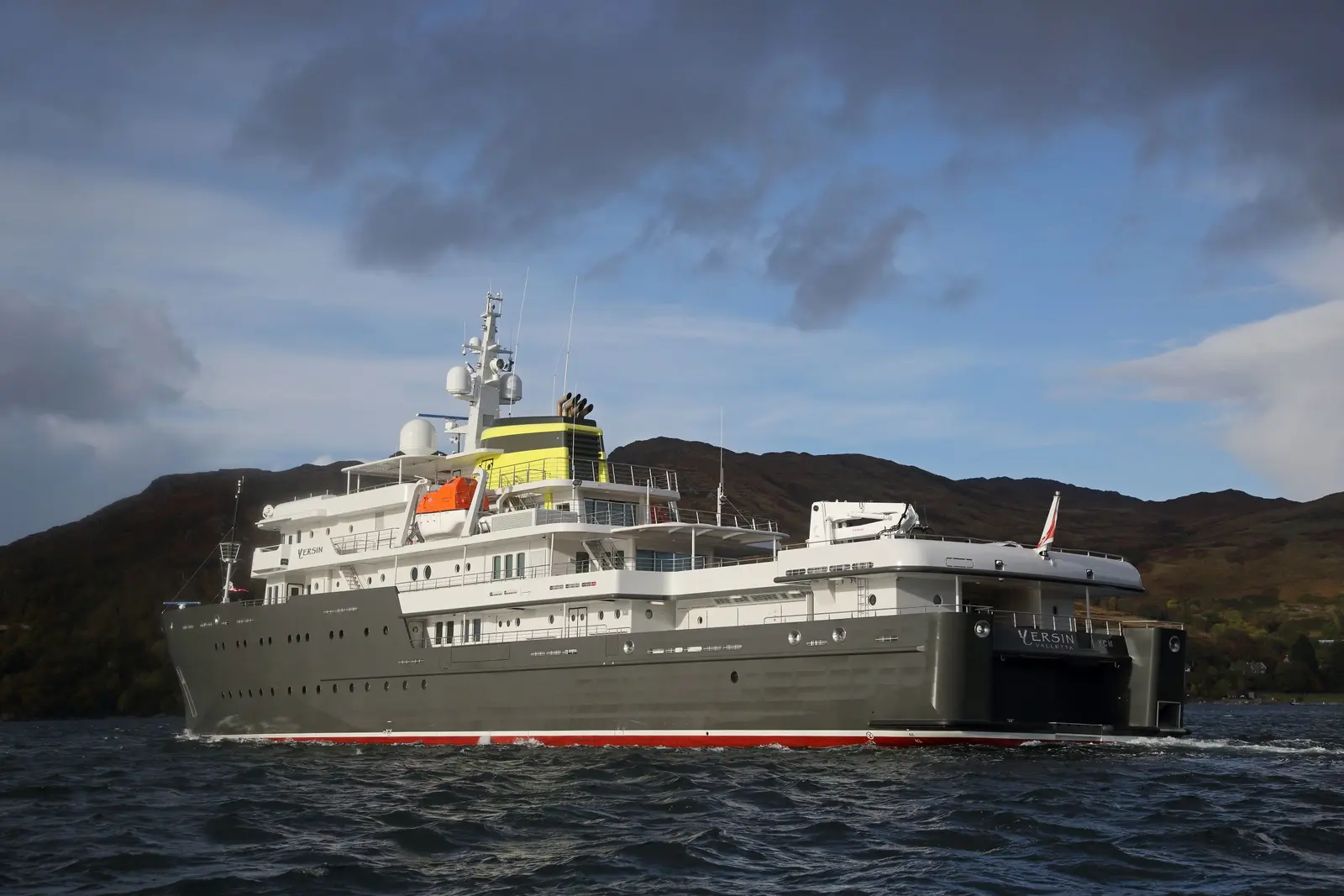
An explorer yacht is a yacht built or converted to cruise long distances without outside support. Typical traits are a displacement hull, a range of several thousand nautical miles and enough fuel, stores and equipment to stay self-sufficient for weeks (Boat International, YachtBuyer). "Expedition yacht" usually means a narrower subset that must operate autonomously where there is little shore support (Boat International).
Princess Motor Yacht Sales noted in 2018 that the yacht-building industry lacks a clear definition of an explorer yacht (Princess). Most yachts over 40 m can already cross the Atlantic with about 3,000 nm of range (Boat International), so range alone does not make an explorer.
From a 12.6 m trawler to a 126 m explorer. The figures are from the builders and the publications listed at the bottom.
A published figure of more than 8,200 nm at 6 knots came from design analysis that left out wind, waves, appendage drag and electrical loads.
Aluminium hull with more than 40% recycled content, left unpainted.
65,000 L of fuel, 10 guests, 9 crew. Sister yacht Maverick has a 22 mm ice belt.
Steel and aluminium; the builder's page gives the speed for that range as both 10 and 12 knots.
Up to 30 days of autonomy, 12 guests in six suites.
Steel hull, ice class 1A according to Boat International; up to 57 crew.
The terms as synonyms. YATCO says plainly that "there is no difference between an explorer and expedition yacht" (YATCO); Princess Motor Yacht Sales agrees (Princess), and YachtBuyer defines an expedition yacht as "also known as an explorer yacht" (YachtBuyer).
Expedition as the narrower term. Boat International writes that "all expedition yachts can be classed as explorers, [but] not every explorer can come under the expedition yacht category". An explorer can cross an ocean without support; an expedition yacht must also operate where there is little or no shore-side infrastructure, sometimes up to 40 days from fresh supplies, with berths for guides and researchers (Boat International).
This site follows the second view, because it tells a buyer something: "explorer" describes range and self-sufficiency, "expedition" adds operation where there is little or no shore support. Brokers and publications often use the two words as synonyms, so a listing labelled "expedition" is not evidence of polar capability. Check range at a stated speed, days of autonomy and the actual ice class.
Explorer vs motor yacht. YATCO says traditional motor yachts tend to be built in fiberglass, cruise in well-travelled areas close to shore and amenities, and are rarely built to an ice class (YATCO). Explorers usually cruise at 10–12 knots, with top speeds around 15 knots (YachtBuyer).
Explorer vs support vessel. A support vessel is a separate ship that travels with a yacht as "a floating helipad, tender garage or accommodation for specialist staff" (Boat International). An explorer carries its own equipment; a support vessel carries it for another yacht. See Yacht support vessels.
Ice class and the Polar Code. The IMO Polar Code has been in force since 1 January 2017 (IMO). It is mandatory under SOLAS, and most SOLAS chapters do not apply to pleasure yachts not engaged in trade (IMO). Amendments in force from 1 January 2026 add the Polar Code chapters on navigation safety and voyage planning for pleasure yachts of 300 GT and above not engaged in trade, on voyages in the Antarctic area and in Arctic waters beyond the flag state's territorial sea (IMO MSC.532(107), ABS). Yachts built before 2026 must comply by 1 January 2027. Details in Ice class yachts.
Benchmarks in published sources. No single threshold makes a yacht an explorer.
| Criterion | Benchmarks in published sources | Notes |
|---|---|---|
| Range | About 2,600 nm as a minimum for an explorer; at least 5,000 nm at 10 knots; 5,400 nm at 10–12 knots for a "true explorer"; 12,500 nm at 12 knots on the 126 m Octopus (data 2022)1,2,3,13 The 2,600 nm figure is the view of Rob McCallum (EYOS Expeditions) and the 5,400 nm figure that of Andrea Pezzini (Floating Life), both quoted by Boat International | Most yachts over 40 m can cross the Atlantic with about 3,000 nm of range1 |
| Fuel | 65,000 L on the 44.46 m Flexplorer 146; 70,000 L on the 44.46 m Bering 145; 900 US gal (3,407 L) on the 12.6 m Nordhavn 414,12,5 | Design range can be far above what a boat achieves at sea (Nordhavn 41, data 2019)6 |
| Autonomy | About 30 days (Damen Xplorer 60); up to 40 days for some expedition yachts7,1,2 | Depends on stores, water makers, waste handling and spares2,3 |
| Hull | Full displacement in most; steel the most popular material, though some builders and designers argue for aluminium2,3,1 | |
| Speed | Cruise at 10–12 knots, top speed around 15 knots2 | |
| Ice class | Optional2 | IACS Polar Classes PC1–PC7 for polar waters8 |
| Tenders and equipment | A 4.4-tonne crane launching a 9.5 m tender on the 44.3 m Maverick (Flexplorer 146); helicopter facilities common on vessels of 70 m and above9,2 | Owners who need more sometimes add a support vessel10 |
| Crew | 9 on a Flexplorer 146; up to 57 on the 126 m Octopus4,1 | Expeditions may add guides, pilots or videographers1 |
The small numbers refer to the sources in the list at the bottom.
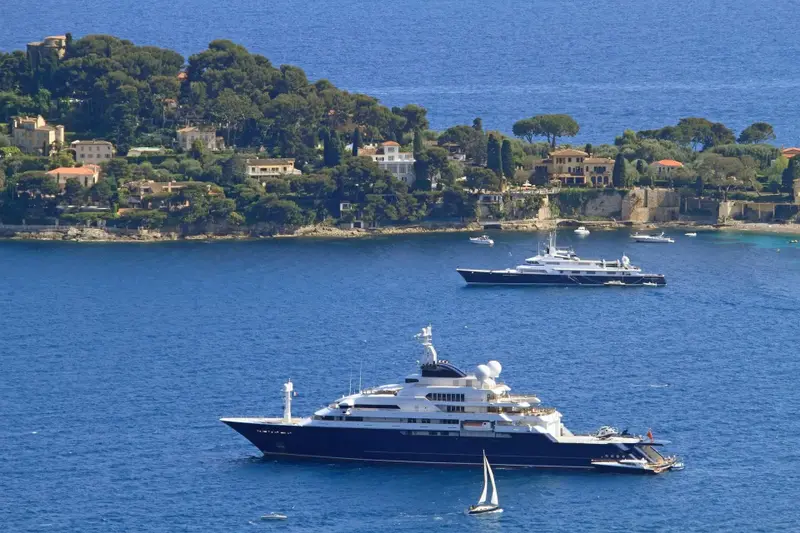
Yachts, support vessels and models with length, range and ice class
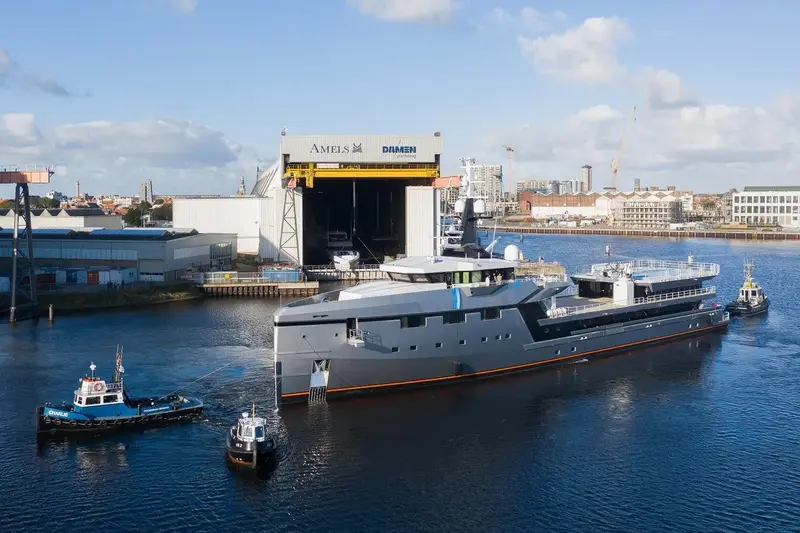
Shadow boats: what they carry, sizes and notable examples
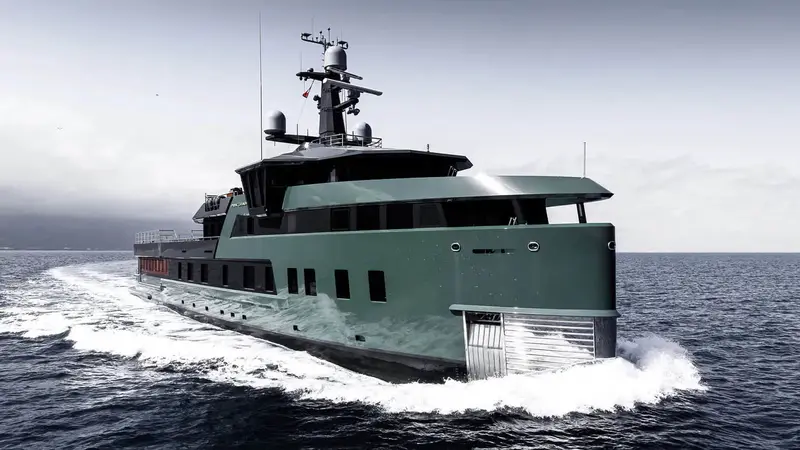
Who builds explorer yachts and their main models
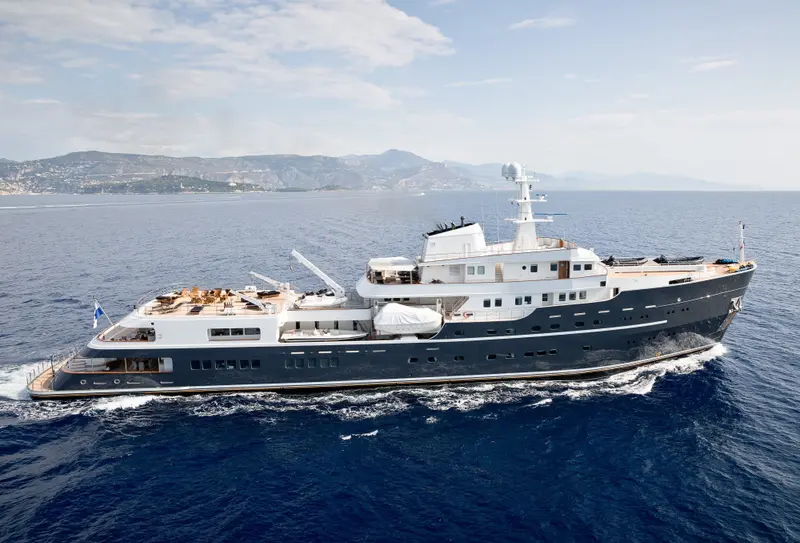
Ice classes explained, the Polar Code and yachts
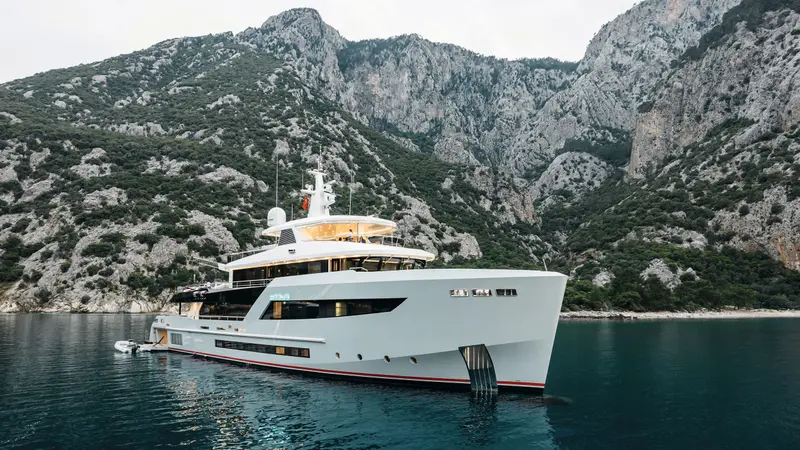
Published list prices with dates, and running costs